云南云塔电力工程有限公司


07
2021
-
12
The “four-electric integration” project for the Hutong Railway has been launched, and today the Hutong Yangtze River Bridge underwent tensioning.
According to Shanghai Release, on the morning of December 5, the first catenary mast for the Hutong Railway (Shanghai–Nantong Railway, Nantong–Anting Section) was successfully erected in Taicang, marking the full-scale rollout of the railway’s four-electric integration project.
The Four-Electricity Integration system is responsible for the power supply and signal transmission required for high-speed rail operations, encompassing power systems along the entire line, catenary systems, traction substations, intelligent disaster prevention and safety monitoring, as well as electromagnetic interference protection. This also signifies that the construction of the Hutong Railway has entered a new phase.
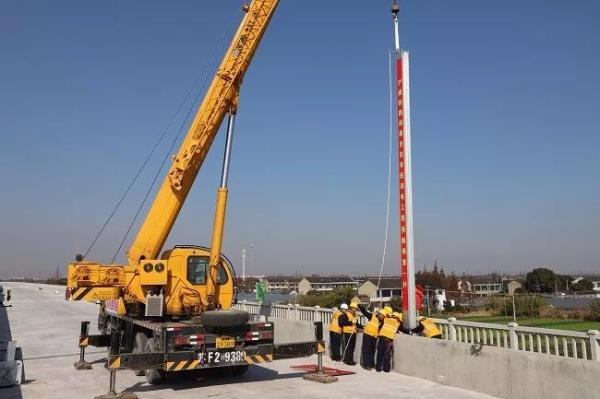
All images in this article are from the Nantong Release WeChat official account.
The Hutong Railway (Nantong–Anting Section) departs from Pingdong Station on the Ningqi Railway, heading east through Changshu and Taicang before connecting to the Beijing–Shanghai Railway at Anting Station to the south. The mainline of the project spans approximately 137 kilometers and features nine stations along its entire length: Pingdong, Nantong West, Zhangjiagang North, Zhangjiagang, Changshu, Taicang Port, Taicang, Taicang South, and Anting. It is a Grade I, double‑track, electrified railway with a designed speed of 200 kilometers per hour, and construction commenced in August 2014.
Since the beginning of this year, good news has been coming in from multiple sections of the Hutong Railway. On August 8, the feasibility study report for the Taicang–Situán section (extending from Taicang Station on the Nantong–Anting section in the north) received approval from the National Development and Reform Commission; on September 2, construction officially began on the Zhangjiagang section, with track-laying commencing; and on October 22, the arch ribs of the dedicated navigation channel bridge of the Hutong Yangtze River Bridge were successfully joined. Once the Hutong Railway opens to traffic, the rail journey between Shanghai and Nantong will be shortened to approximately one hour.
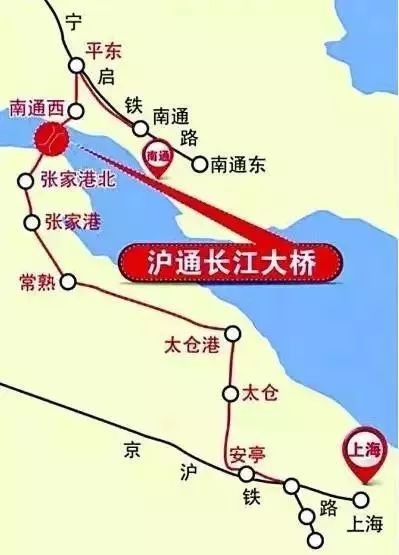
Among them, the Shanghai–Nanjing Intercity Railway’s Yangtze River crossing, the Shanghai–Nanjing Yangtze River Bridge, has also made new progress. On December 5, all 114 suspension cables for the Tiansheng Port Dedicated Navigation Channel Bridge of the Shanghai–Nanjing Yangtze River Bridge were fully installed and in place, and preparatory work for tensioning has been completed; tensioning will begin on December 6.
Construction on the project commenced on March 1, 2014, with a planned duration of five and a half years. Since all arch ribs of the Tianshenggang Dedicated Navigation Channel Bridge of the Hutong Yangtze River Bridge were successfully joined on October 22 of this year, the Tianshenggang Dedicated Navigation Channel Bridge has entered the cable installation phase.
According to reports, the suspenders are located between the steel girders and the arch ribs, integrating the bridge deck with the arch ribs and thereby transferring the loads from the bridge deck to the arch ribs. At present, all the suspenders are in a slack, unloaded state, which means that the arch ribs and steel girders have not yet been fully connected into a stable structure.
Tensioning involves stretching each suspension cable to a specific stress state at the end of the steel beam, then anchoring the cables at the beam’s ends. Under tension, the cables are tightly stretched, transferring the loads from the steel beam to the steel arch. The arch’s curved structure then distributes these forces to the two main piers numbered 3 and 4, thereby unifying the entire structural system of the TianShengGang Dedicated Navigation Channel Bridge.
Starting December 6, the Project Department of China Communications Second Harbor Engineering Company will deploy six sets of tensioning equipment to simultaneously and symmetrically tension the suspenders from the north and south sides of the TianShengGang Dedicated Navigation Channel Bridge, with all six suspenders at the same cross‑section on both sides being tensioned at the same time. Based on real‑time data transmitted by pressure sensors installed on the suspenders, the tensioning forces of the equipment can be adjusted promptly, enabling precise control over the stress and geometry of the steel arch and steel girders. The entire tensioning process is expected to be fully completed by the end of this month, at which point the stay cables can be released and the temporary auxiliary support structures of the stay towers on both sides of the Dedicated Navigation Channel Bridge can be dismantled.
Related News
Unveiling the Working Principles of Power Engineering Design
Gain a deep understanding of the fundamental principles and applications of power engineering design, and explore its significance in modern society.
Trends and Challenges in the Power Engineering Design Industry
Explore the latest developments and challenges in power engineering design, offering new perspectives for industry professionals.
Power Engineering Design: Wisdom and Innovation in the Power Sector
Explore the fundamental knowledge and cutting-edge trends in power engineering design, and learn how to promote sustainable development in the power industry.